

AI Devtools

Driving the Agent Quality Flywheel from Your Coding Agent: The AI Builder Signal Worth Reading Before You React

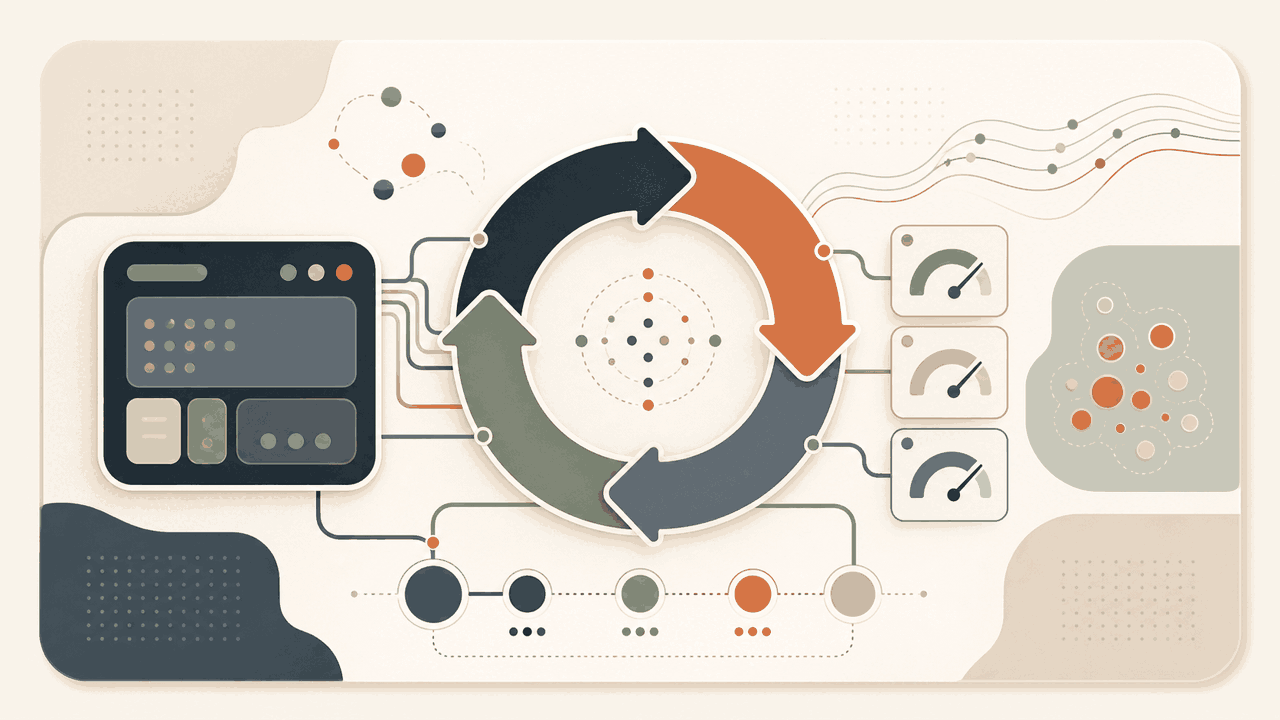
Building AI agents often leaves developers uncertain if prompt tweaks to fix single errors will accidentally cause widespread regressions in production. To bridge this gap, Google has introduced a new developer skill for coding agents that automates a five-stage evaluation flywheel: preparing data, running inference, grading with adaptive AutoRaters, analyzing failure clusters, and executing targeted optimizations. Running continuously against production traffic or on-demand via synthetic scenar

Generated HypeDar thumbnail for Driving the Agent Quality Flywheel from Your Coding Agent: The AI Builder Signal Worth Reading Before You React
Building AI agents often leaves developers uncertain if prompt tweaks to fix single errors will accidentally cause widespread regressions in production. To bridge this gap, Google has introduced a new developer skill for coding agents that automates a five-stage evaluation flywheel: preparing data, running inference, grading with adaptive AutoRaters, analyzing failure clusters, and executing targeted optimizations. Running continuously against production traffic or on-demand via synthetic scenar

A source item was harvested into the radar queue.

This may matter if it changes what builders can ship, automate, sell, or safely ignore.

“Builders do not need more AI headlines. They need to know which signals deserve action.”

The shift from noise to action

Validate the source trail, check whether a workflow or product wedge exists, then score conservatively.

  • The opportunity is not another generic wrapper. A builder would need a vertical niche around Driving the Agent Quality Flywheel from Your Coding Agent, proprietary workflow data, or a service-led distribution channel to avoid a crowded race.
  • The dependency risk is platform churn. If Driving the Agent Quality Flywheel from Your Coding Agent changes API shape, pricing, permissions, or adoption curve, builders without workflow ownership can lose leverage quickly.
  • Keep as draft unless source reliability and builder impact are clear.

HypeDar turns source trails, market movement, and builder fit into a practical decision: build, watch, ignore, or wait.

Opportunity

The opportunity is not another generic wrapper. A builder would need a vertical niche around Driving the Agent Quality Flywheel from Your Coding Agent, proprietary workflow data, or a service-led distribution channel to avoid a crowded race.

Risk

The dependency risk is platform churn. If Driving the Agent Quality Flywheel from Your Coding Agent changes API shape, pricing, permissions, or adoption curve, builders without workflow ownership can lose leverage quickly.

What changed

A source item was harvested into the radar queue. The headline matters because it changes the practical menu for builders, not because it adds another noisy AI launch to the feed. HypeDar is treating it as a source-backed signal that deserves a build/watch decision instead of a generic repost.

The most useful way to read this story is through constraints. Who gets leverage from it this month? Which workflow becomes cheaper, faster, or easier to sell? Which old assumption becomes weaker? Those questions matter more than the announcement language. The source trail from Google Developers Blog suggests there is enough substance to map the signal into product work, but not enough reason to blindly chase it without a scope boundary.

Why it matters now

This may matter if it changes what builders can ship, automate, sell, or safely ignore. Timing matters because AI infrastructure, developer tools, and workflow products are converging around buyers who want implementation help, not abstract model news. A builder who moves too late sees a crowded category; a builder who moves too early gets stuck educating customers.

This sits in the middle: there is visible momentum, enough implementation surface, and still room to package the messy parts. That is usually where small teams can win. They do not need to own the whole stack. They need to own a painful slice that incumbents will not prioritize and generic AI wrappers cannot explain.

The builder read

Validate the source trail, check whether a workflow or product wedge exists, then score conservatively. The stronger interpretation is not “build a clone.” It is to identify the repeatable behavior underneath the signal. If a new capability makes a workflow reliable, the opportunity is often in templates, monitoring, handoff design, onboarding, vertical data, or compliance guardrails.

Three checks decide whether this deserves real build time:

  • Can you describe the buyer in one sentence without saying “everyone using AI”?
  • Can you produce a before/after demo in less than a week?
  • Can the workflow survive if the underlying vendor changes pricing, rate limits, or API shape?

If the answer is yes, the signal is worth a small prototype. If not, keep it in watch mode and wait for stronger adoption data.

Opportunity map

The opportunity is not another generic wrapper. A builder would need a vertical niche around Driving the Agent Quality Flywheel from Your Coding Agent, proprietary workflow data, or a service-led distribution channel to avoid a crowded race. The opening is probably not a broad platform. It is a packaged workflow with a narrow promise: save time, reduce review mistakes, speed up research, create better handoffs, or help a team adopt the new capability without hiring a specialist.

For agencies and technical founders, the most attractive wedge is a service-product hybrid. Start with manual delivery, instrument the repeatable steps, and only automate once the customer language is clear. That prevents the classic AI-builder mistake: shipping an impressive demo before proving the buyer cares.

Risks and second-order effects

The dependency risk is platform churn. If Driving the Agent Quality Flywheel from Your Coding Agent changes API shape, pricing, permissions, or adoption curve, builders without workflow ownership can lose leverage quickly. The risk is not only technical. It is positioning. A crowded AI category punishes vague products. A dependency-heavy category punishes teams that confuse integration speed with defensibility. The safer path is to own the workflow data, customer-specific evaluation, and operational process around the new capability.

Premium implementation playbook

The best part is gated

want to read how to implement this? Try premium, you won't regret it

Try premium

What to do next

Keep as draft unless source reliability and builder impact are clear. Keep the first build intentionally small. Pull the source material into a one-page decision memo, define the workflow, build the smallest credible demo, and talk to five likely buyers before adding more automation.

The practical conclusion: this is worth watching if you only consume AI news, but it is worth testing if you build for teams that need implementation help. The difference is discipline. Do not chase the headline. Chase the workflow that the headline makes newly possible.

Sources

Updated: 2026-07-06. Source reliability: Official.