

Platform Changes

China eyes export curbs on its top AI models and Europe is: What AI Builders Should Do Next

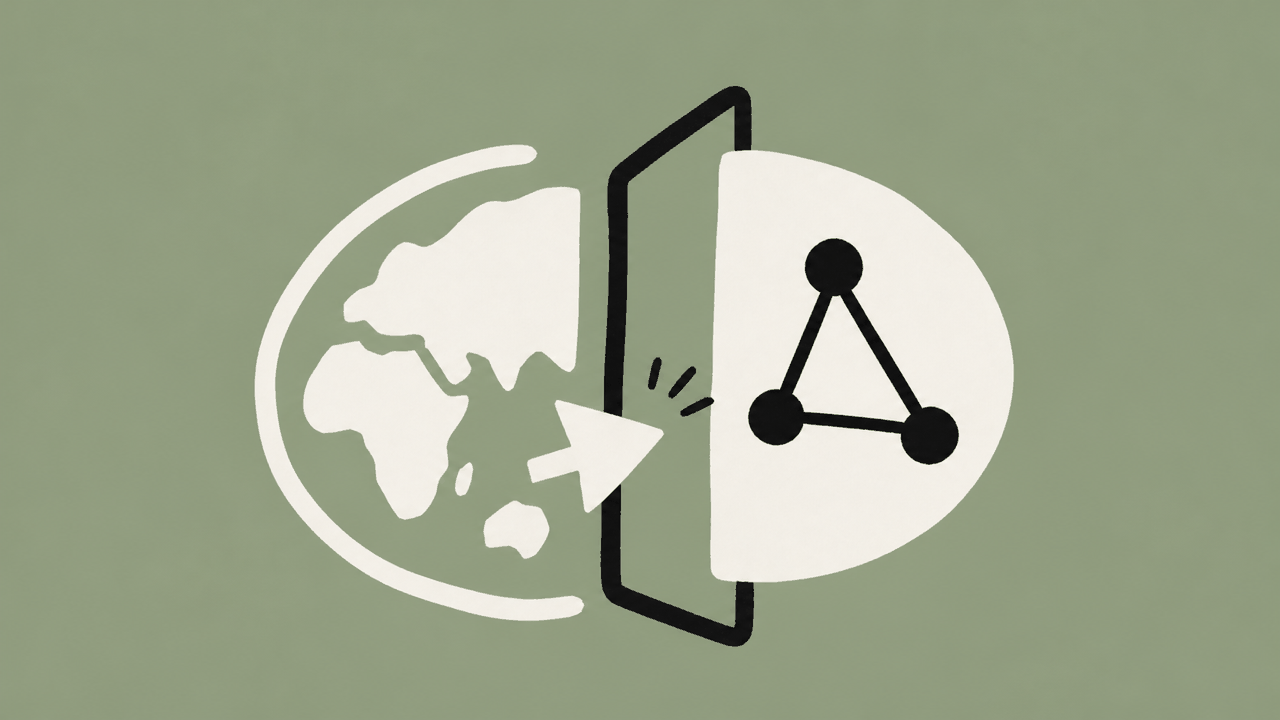
According to Reuters, Chinese authorities are looking into restricting foreign access to the country's most powerful AI models. Alibaba, Bytedance, and Z.ai would all be affected. The move means both superpowers now treat AI as a strategic asset. For Europe, the convenient shortcut of relying on cheap Chinese open-source models could close much faster than expected. The article China eyes export curbs on its top AI models, and Europe is caught in the middle appeared first on The Decoder .

Generated HypeDar thumbnail for China eyes export curbs on its top AI models and Europe is: What AI Builders Should Do Next
According to Reuters, Chinese authorities are looking into restricting foreign access to the country's most powerful AI models. Alibaba, Bytedance, and Z.ai would all be affected. The move means both superpowers now treat AI as a strategic asset. For Europe, the convenient shortcut of relying on cheap Chinese open-source models could close much faster than expected. The article China eyes export curbs on its top AI models, and Europe is caught in the middle appeared first on The Decoder .

The Decoder AI put China eyes export curbs on its top AI models and Europe is on the radar. The news is useful because it hints at a concrete builder decision, not because it is another AI headline.

This matters because platform control points change faster than buyer workflows. Builders who notice the control layer early can package migration, monitoring, policy, or reliability work before the category becomes crowded.

“Builders do not need more AI headlines. They need to know which signals deserve action.”

The shift from noise to action

Read China eyes export curbs on its top AI models and Europe is as a workflow test: who gets a faster handoff, cheaper operation, safer review loop, or clearer buying reason this month?

  • The near-term opportunity is a decision product around China eyes export curbs on its top AI models and: track the source, extract the constraint, and test one internal workflow before turning it into a customer-facing offer.
  • The dependency risk is platform churn. If China eyes export curbs on its top AI models and changes API shape, pricing, permissions, or adoption curve, builders without workflow ownership can lose leverage quickly.
  • Read the source, write a one-page build or skip memo, then test one buyer workflow before adding automation.

HypeDar turns source trails, market movement, and builder fit into a practical decision: build, watch, ignore, or wait.

Opportunity

The near-term opportunity is a decision product around China eyes export curbs on its top AI models and: track the source, extract the constraint, and test one internal workflow before turning it into a customer-facing offer.

Risk

The dependency risk is platform churn. If China eyes export curbs on its top AI models and changes API shape, pricing, permissions, or adoption curve, builders without workflow ownership can lose leverage quickly.

What changed

The Decoder AI put China eyes export curbs on its top AI models and Europe is on the radar. The news is useful because it hints at a concrete builder decision, not because it is another AI headline.

The interesting part is not the announcement itself. It is the constraint underneath it: what becomes cheaper, which handoff gets less painful, and where a builder can make a sharper build or skip call before the feed turns it into generic AI noise.

Why it matters now

This matters because platform control points change faster than buyer workflows. Builders who notice the control layer early can package migration, monitoring, policy, or reliability work before the category becomes crowded.

The timing matters because teams are not buying abstract AI progress. They are buying implementation help, risk reduction, and workflows that survive contact with production. That is where a small team can still win: not by owning the whole stack, but by owning the confusing slice that users already want solved.

The useful read

Read China eyes export curbs on its top AI models and Europe is as a workflow test: who gets a faster handoff, cheaper operation, safer review loop, or clearer buying reason this month?

Three checks decide whether this deserves real build time:

  • can you name the buyer without saying “everyone using AI”?
  • can you show a before and after demo in less than a week?
  • can the workflow survive if a vendor changes pricing, rate limits, permissions, or API shape?

If those answers are weak, this stays in watch mode. If they are strong, it is a prototype candidate.

Opportunity map

The near-term opportunity is a decision product around China eyes export curbs on its top AI models and: track the source, extract the constraint, and test one internal workflow before turning it into a customer-facing offer.

The opening is usually a service-product hybrid: do the workflow manually first, instrument the repeatable pieces, then automate only after customers repeat the same pain in their own language.

Risks and second-order effects

The dependency risk is platform churn. If China eyes export curbs on its top AI models and changes API shape, pricing, permissions, or adoption curve, builders without workflow ownership can lose leverage quickly.

The second-order effect is positioning. A crowded AI category punishes vague products. A dependency-heavy category punishes teams that confuse integration speed with defensibility. The safer path is to own the workflow data, evaluation loop, and operating process around the new capability.

Premium implementation playbook

The best part is gated

want to read how to implement this? Try premium, you won't regret it

Try premium

What to do next

Read the source, write a one-page build or skip memo, then test one buyer workflow before adding automation.

The practical conclusion: do not chase the headline. Chase the workflow the headline makes newly possible, and kill the idea fast if the workflow cannot produce a buyer, a demo, and a pricing reason.

Sources

Updated: 2026-07-07. Source reliability: Confirmed.